10 Creative DIY Wall Art Ideas for Kids Bedrooms That Spark Imagination
Creating a magical space for your child doesn’t require expensive artwork or professional decorators. With simple materials and creative vision, you can transform blank bedroom walls into inspiring canvases that reflect your child’s personality and fuel their imagination.
These DIY wall art projects combine creativity with functionality, turning your child’s room into a personalized sanctuary where dreams come to life. From interactive elements to soothing nighttime features, each idea offers unique benefits for your child’s development and comfort.
1. Colorful Handprint Gallery Wall
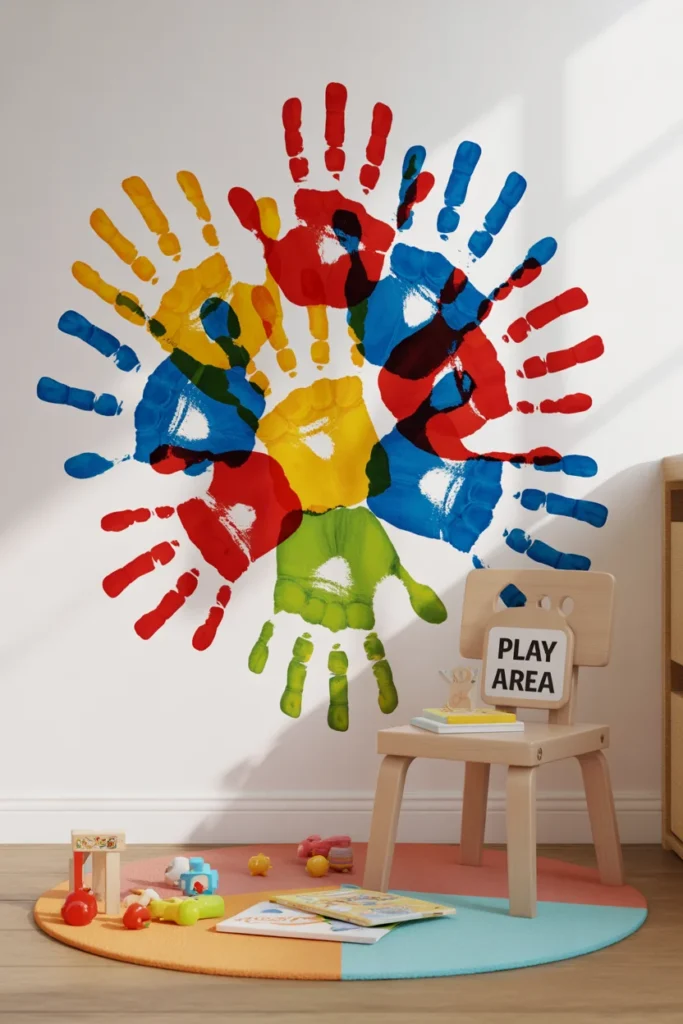
Transform your child’s growing hands into lasting art pieces with creative handprint displays. This project captures precious memories while creating vibrant wall decor that evolves with your family.
Along with paints, brushes, and craft supplies, you can enhance the overall look of the room with smart bedroom accessories that complement your DIY wall art projects.
Materials Needed:
- Non-toxic acrylic paint
- Canvas panels or heavy paper
- Paintbrushes
- Wet wipes for cleanup
- Picture frames
Benefits for Child Development: Handprint art projects enhance fine motor skills and provide sensory experiences. Children learn about colors, patterns, and self-expression while creating something uniquely theirs.
Creative Variations: Turn handprints into animals, flowers, or seasonal themes. Create a growth timeline by adding new handprints each year, showing how your child’s hands have grown.
2. Interactive Chalkboard Wall
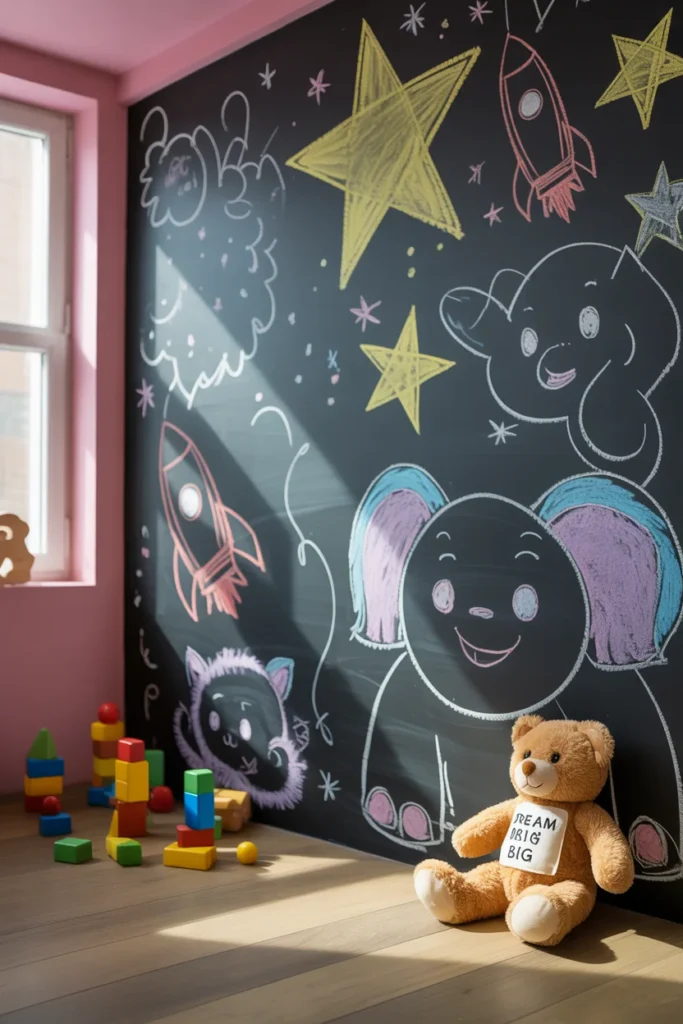
Convert an entire wall or section into a creative drawing surface where imagination runs free. This interactive element encourages daily creativity and provides endless entertainment.
Installation Process: Apply chalkboard paint to a smooth wall surface, following manufacturer instructions for proper curing time. Frame the area with colorful tape or molding for a finished appearance.
Educational Benefits: Chalkboard walls support literacy development, mathematical learning, and artistic expression. Children practice writing letters, solving problems, and sketching ideas in a pressure-free environment.
Maintenance Tips: Use quality chalk that erases cleanly. Occasionally condition the surface with chalk dust to maintain optimal writing quality and prevent ghosting.
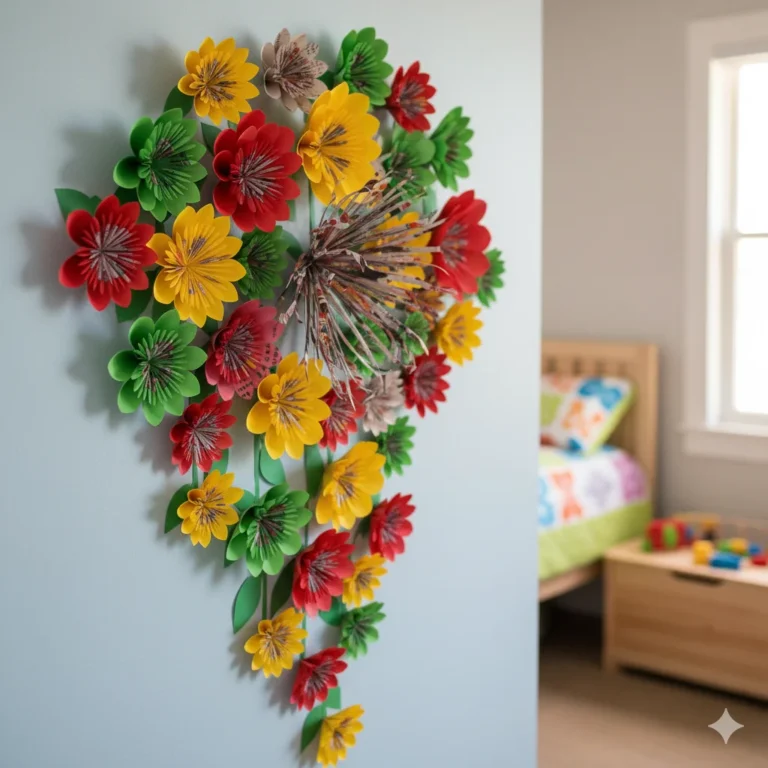
3. Delicate Paper Butterfly Display
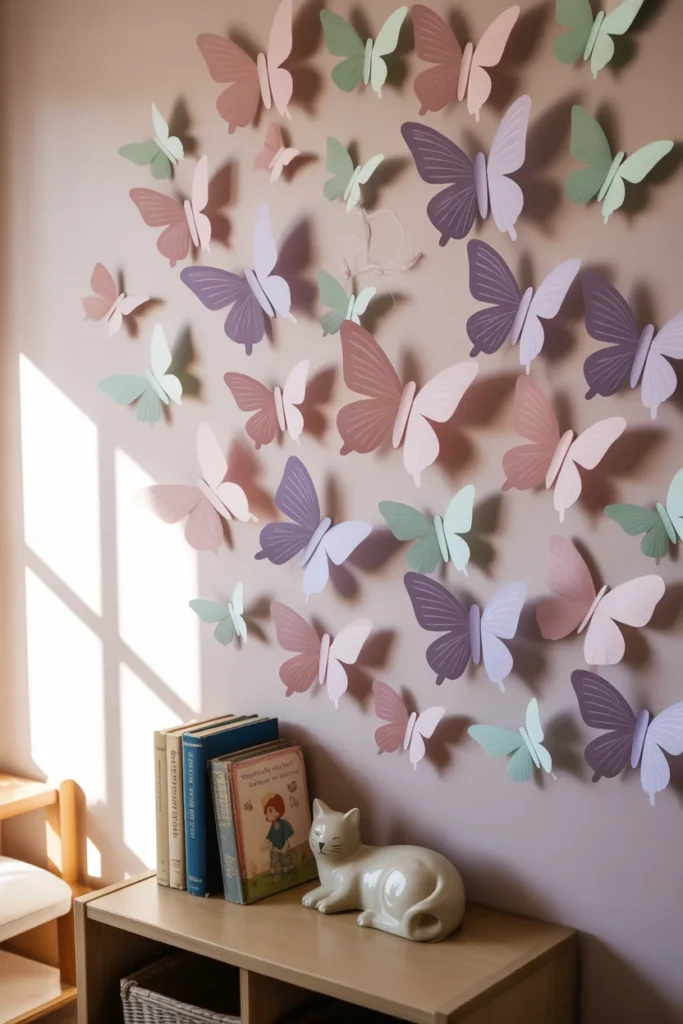
Create a whimsical butterfly garden using colorful paper and simple crafting techniques. This project brings nature indoors while teaching children about symmetry and design.
Crafting Materials:
- Colored cardstock or scrapbook paper
- Scissors
- Glue or double-sided tape
- Butterfly templates
- Thin wire or string
Assembly Techniques: Cut butterflies in various sizes using templates. Layer different colors for depth and dimension. Attach to walls using removable adhesive dots to prevent damage.
Learning Opportunities: Discuss butterfly life cycles, colors in nature, and migration patterns while creating. This project combines art with science education naturally.
4. Personal Art Gallery Showcase
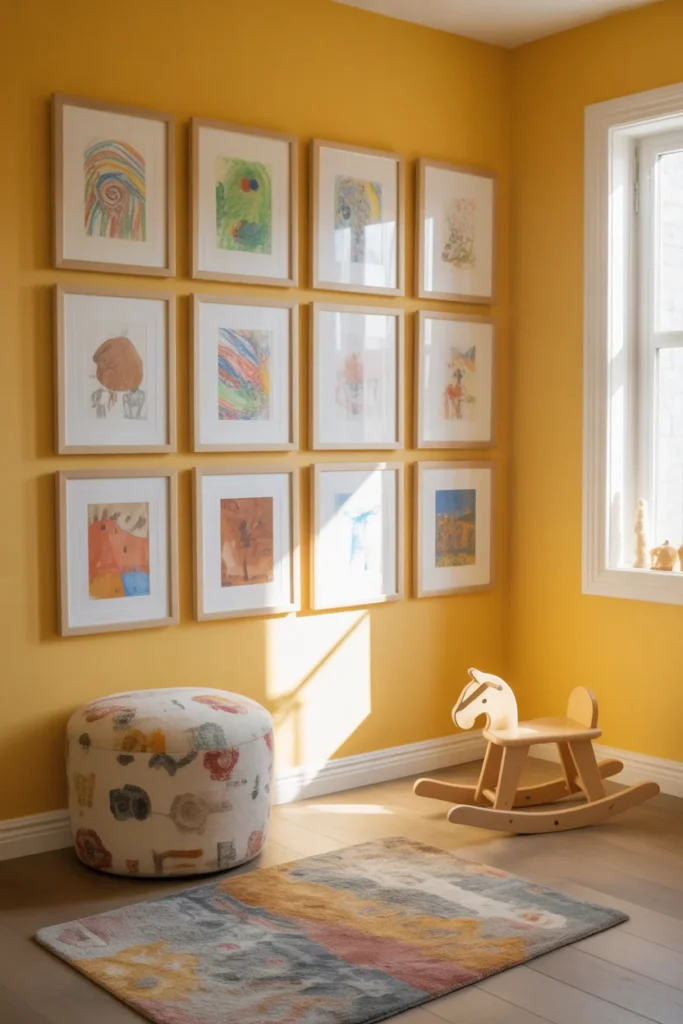
Display your child’s artistic creations in a dedicated gallery space that celebrates their creativity and builds confidence in their abilities.
Display Strategy: Use matching frames in various sizes to create cohesion. Arrange artwork at your child’s eye level so they can easily view and feel proud of their accomplishments.
Rotation System: Implement a rotation schedule to showcase new artwork regularly. Store previous pieces in a portfolio to create a long-term collection of their artistic journey.
Confidence Building: A personal gallery validates children’s creative efforts and encourages continued artistic exploration. Friends and family can admire their work, boosting self-esteem.
5. Magical Nighttime Star Display
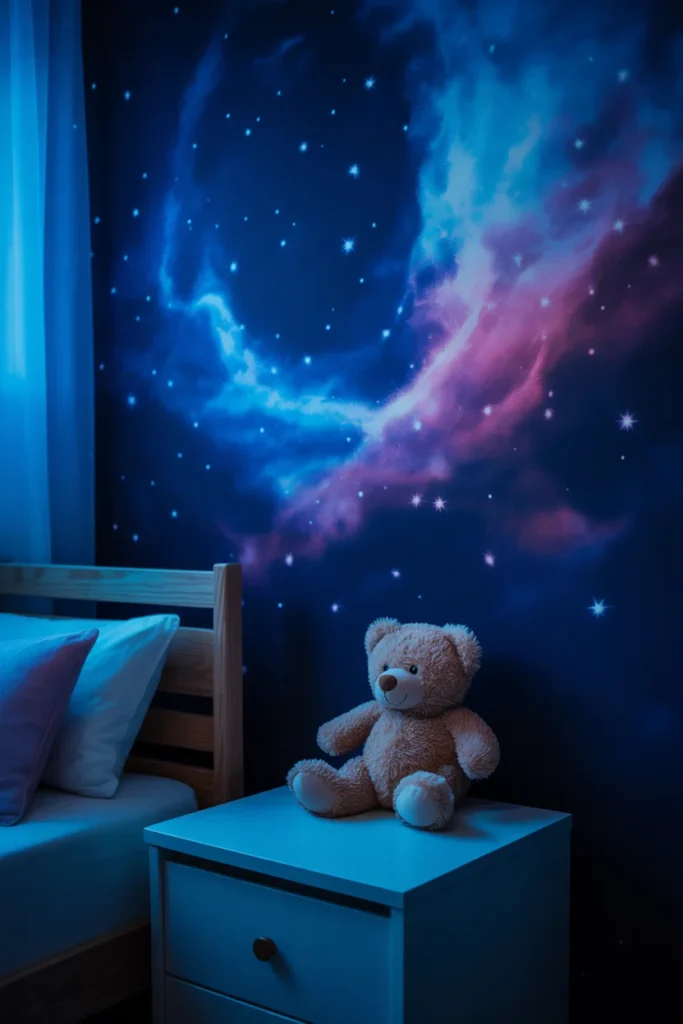
Transform bedtime into an enchanting experience with glow-in-the-dark constellations that provide comfort during nighttime hours.
Materials Required:
- Glow-in-the-dark paint or stickers
- Star stencils
- Black light (optional for charging)
- Constellation guides
Application Method: Research actual constellation patterns or create imaginative star arrangements. Apply during daylight hours and charge with room lighting for optimal nighttime visibility.
Sleep Benefits: Gentle glowing elements can reduce nighttime anxiety and create positive bedtime associations. Children feel more secure in their decorated space.
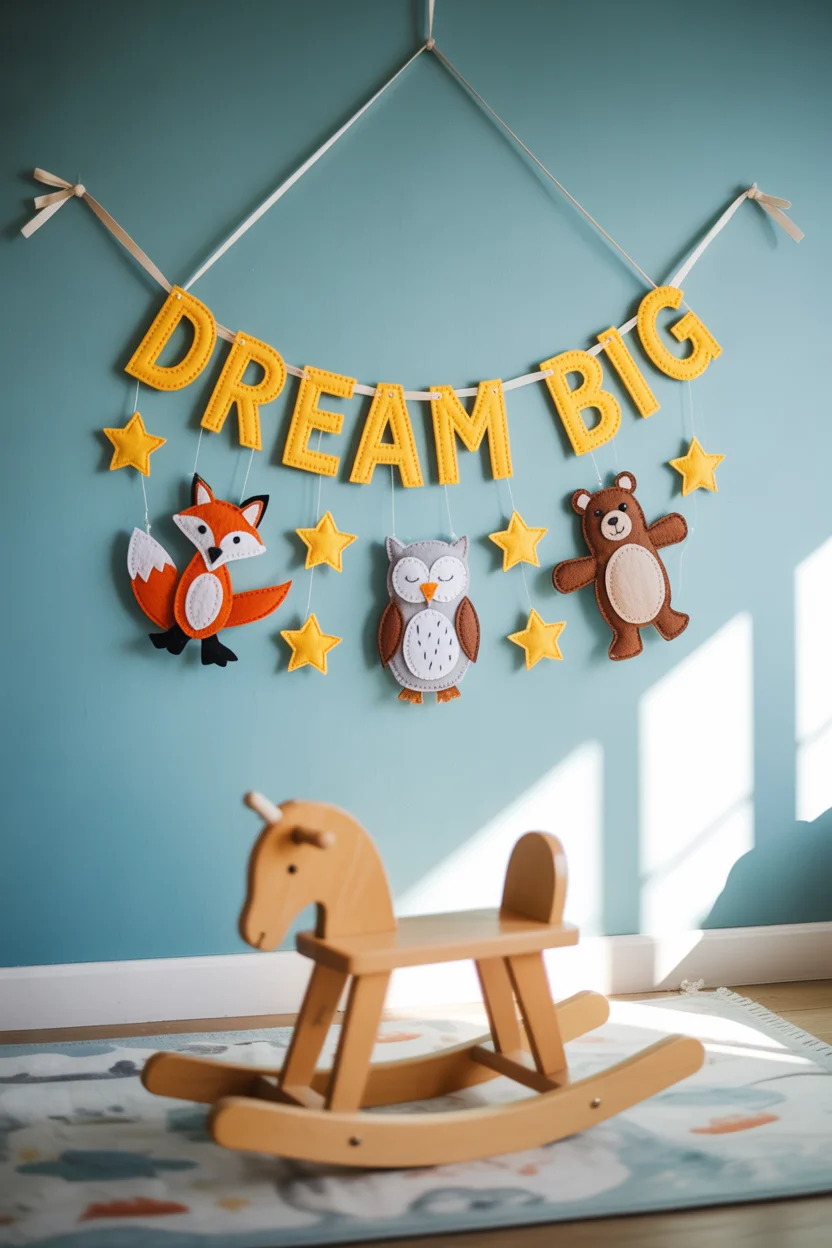
6. Whimsical Animal Banner Display
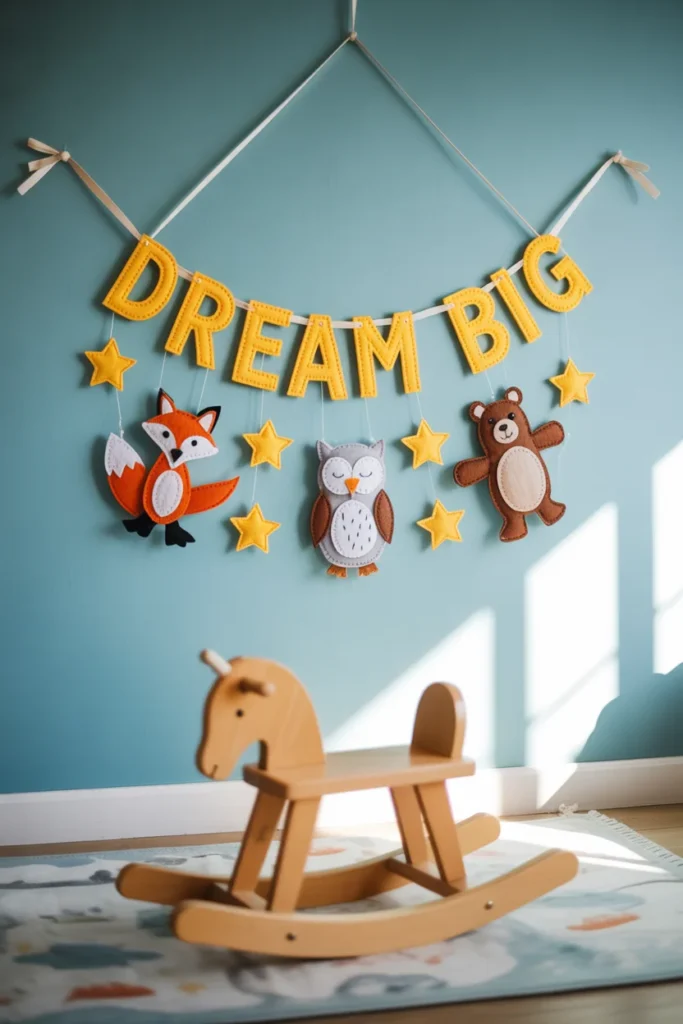
Create soft, tactile wall decorations using felt materials that add texture and warmth to the bedroom environment.
Felt Crafting Process: Cut animal shapes and decorative elements from colored felt sheets. Sew or glue pieces together to create dimensional characters with personality.
Hanging Solutions: String completed pieces on colorful ribbon or twine. Create swags across walls or frame doorways for welcoming entrances.
Sensory Benefits: Felt materials provide tactile stimulation and visual softness. Children enjoy touching different textures, supporting sensory development.
7. Ocean Adventure Mural

Transport your child to underwater worlds with hand-painted murals that stimulate imagination and create immersive play environments.
Planning Your Mural: Sketch designs on paper first, considering room layout and furniture placement. Start with background colors and add detailed elements gradually.
Painting Techniques: Use sponges for textured coral effects. Layer colors to create depth and movement in water scenes. Add glitter accents for magical sparkle effects.
Educational Integration: Discuss marine life, ocean conservation, and different sea creatures while painting. This project combines art with environmental education.
8. Dreamy Moon and Stars Corner

Create a peaceful sleeping area with soft lighting elements that provide comfort and security during bedtime routines.
Lighting Installation: Use battery-operated LED fairy lights for safety. Arrange around moon cutouts and star shapes for magical effects without electrical hazards.
Material Safety: Ensure all materials meet child safety standards. Secure electrical elements properly and use battery-operated options when possible.
Calming Environment: Soft lighting promotes relaxation and healthy sleep patterns. Children associate their decorated space with comfort and security.
9. Recycled Frame Art Display
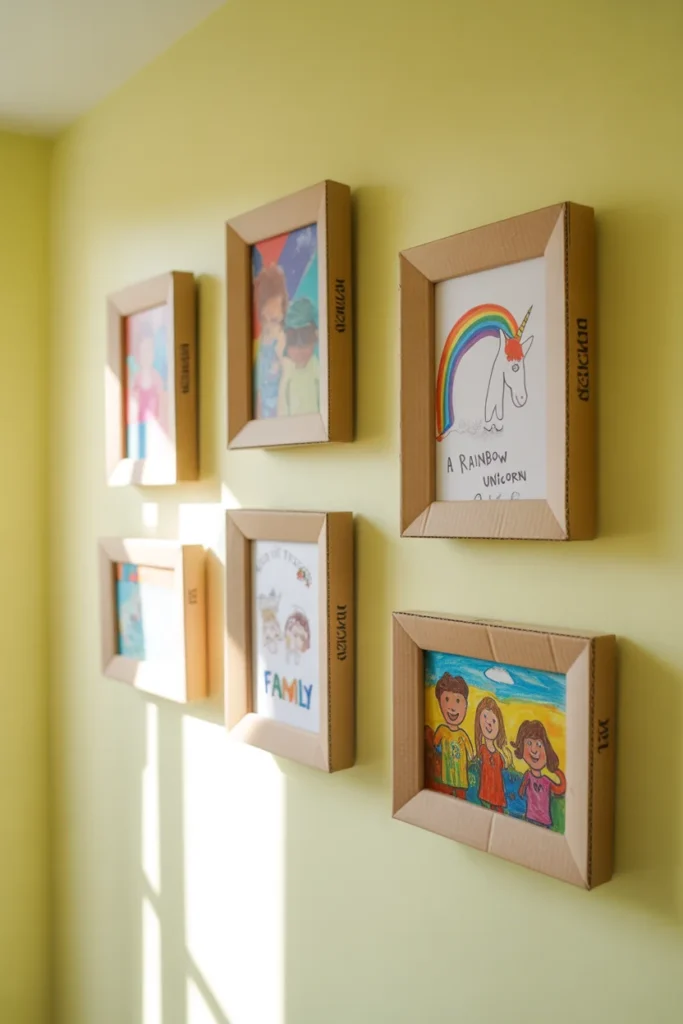
Teach sustainability while creating functional art displays using recycled materials and creative construction techniques.
Eco-Friendly Materials: Repurpose cardboard boxes, egg cartons, and other household items. Decorate with paint, fabric scraps, or natural materials like leaves and flowers.
Environmental Benefits: Children learn about recycling, creativity from limited resources, and environmental responsibility through hands-on projects.
Construction Skills: Basic cutting, gluing, and measuring skills develop through frame-making projects. Children gain confidence in using tools safely.
10. Vibrant Rainbow Paper Sculpture
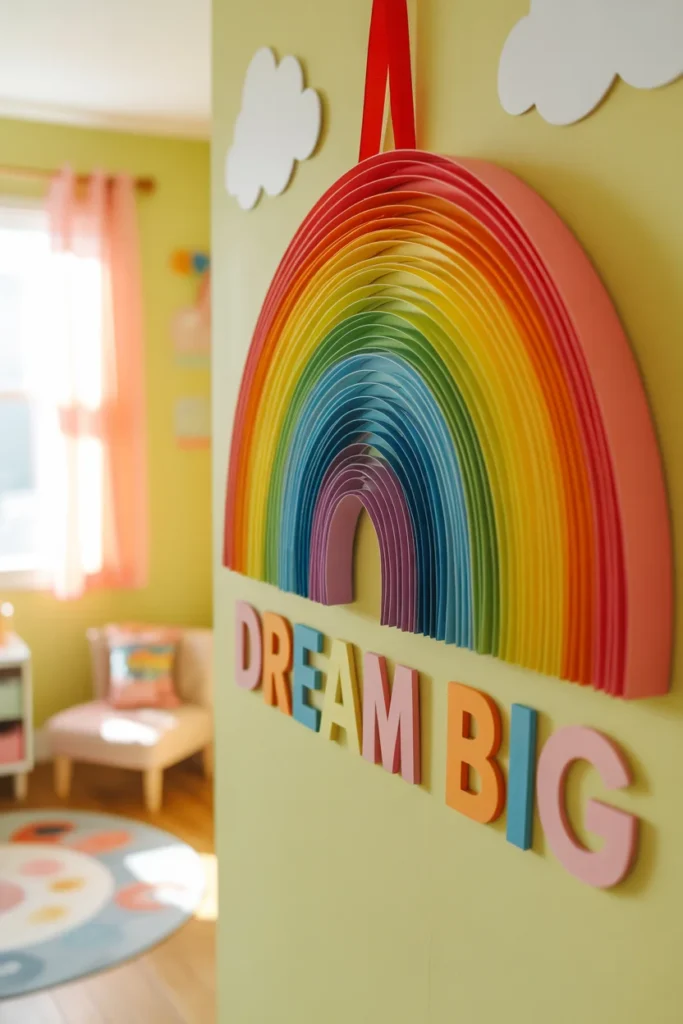
Create dimensional rainbow displays that bring joy and color theory education into your child’s personal space.
Paper Crafting Techniques: Layer different paper types for varied textures. Use accordion folds, spirals, and curved cuts to create movement and dimension in flat materials.
Color Learning: Discuss primary and secondary colors, rainbow formation, and color mixing while crafting. This project naturally integrates science concepts.
Mood Enhancement: Bright colors positively impact mood and energy levels. Rainbow elements create optimistic, cheerful environments that support emotional well-being.
Safety Considerations for DIY Projects
Non-Toxic Materials: Always choose child-safe paints, adhesives, and crafting supplies. Read labels carefully and ensure proper ventilation during projects.
Supervision Requirements: Age-appropriate supervision ensures safety while encouraging independence. Adapt projects based on your child’s developmental stage and abilities.
Secure Installation: Properly mount all wall decorations to prevent falling hazards. Use appropriate hardware for wall types and decoration weights.
Budget-Friendly Project Tips
Cost-Effective Supplies: Purchase basic materials in bulk and reuse them across multiple projects. Dollar stores often carry suitable crafting supplies at reduced costs.
Seasonal Shopping: Buy supplies during back-to-school sales or craft store clearance events. Stock up on frequently used items when prices drop.
Community Resources: Check libraries, community centers, and schools for free craft supplies or group project opportunities. Share materials with other families to reduce individual costs.
Involving Children in Creation Process
Age-Appropriate Tasks: Assign project elements suitable for your child’s developmental stage. Young children can help with color choices and simple assembly tasks.
Skill Development: DIY projects enhance problem-solving abilities, following directions, and creative thinking. Children gain confidence through successful completion of challenging tasks.
Quality Time Benefits: Working together on creative projects strengthens family bonds and creates lasting memories beyond the finished artwork.
Maintenance and Updates
Seasonal Changes: Update decorations to reflect seasons, holidays, or your child’s changing interests. This keeps the space fresh and engaging throughout the year.
Growth Adaptations: Modify projects as children grow and develop new preferences. What appeals to a toddler differs significantly from elementary school interests.
Preservation Methods: Photograph completed projects before updating to maintain memories. Create digital albums showing your child’s evolving artistic journey and room transformations.
Conclusion
DIY wall art projects transform children’s bedrooms into personalized spaces that nurture creativity, learning, and emotional development. These ten ideas provide starting points for creating magical environments that grow and change with your child.
The most successful projects combine your child’s interests with developmental benefits, creating functional art that serves multiple purposes. Remember that the process matters as much as the final result – working together builds memories while creating beautiful spaces.
Start with one project that excites your child most, then expand your artistic journey together. Each creation adds personality and warmth to their special space while supporting their growth and imagination.