How to Clean Outdoor Cushions and Keep Them Looking New
Outdoor cushions endure constant exposure to elements, making regular maintenance essential for preserving their appearance and extending their lifespan. This comprehensive guide covers everything you need to know about cleaning, maintaining, and protecting your patio cushions.
Understanding Your Cushion Materials
Different outdoor fabrics require specific care approaches. Most modern patio cushions feature these materials:
Solution-Dyed Acrylic Fabrics (like Sunbrella)
- Highly resistant to fading and mildew
- Can tolerate bleach-based cleaners
- Marine-grade durability
Polyester Outdoor Fabrics
- Water-repellent properties
- Affordable and widely available
- Moderate stain resistance
Olefin Fabrics
- Excellent mold resistance
- Quick-drying capabilities
- Colorfastness guaranteed
Vinyl Materials
- Completely waterproof
- Easy surface cleaning
- Budget-friendly option
Always check manufacturer care labels before beginning any cleaning process.
Essential Cleaning Supplies
Gather these items before starting:
- Garden hose with spray attachment
- Soft-bristled scrub brush
- Microfiber cloths
- Large bucket or container
- Spray bottles
- Vacuum with upholstery attachment
- Tarps for workspace protection
Method 1: Basic Hand Cleaning
Step 1: Initial Preparation Begin by laying the cushions out on a deck, driveway or sidewalk to avoid creating mud or grass stains. First, brush off any dirt or debris before it becomes embedded in the fabric.
Step 2: Vacuum Surface Debris Use a vacuum with an upholstery attachment to remove surface dirt, soil and debris. Pay attention to seams and crevices where particles accumulate.
Step 3: Create Cleaning Solution For an effective and natural cleaner to use on outdoor cushions, mix a 1/2 cup of dish soap, 1 cup of white vinegar and 1 gallon of warm water in a bucket.
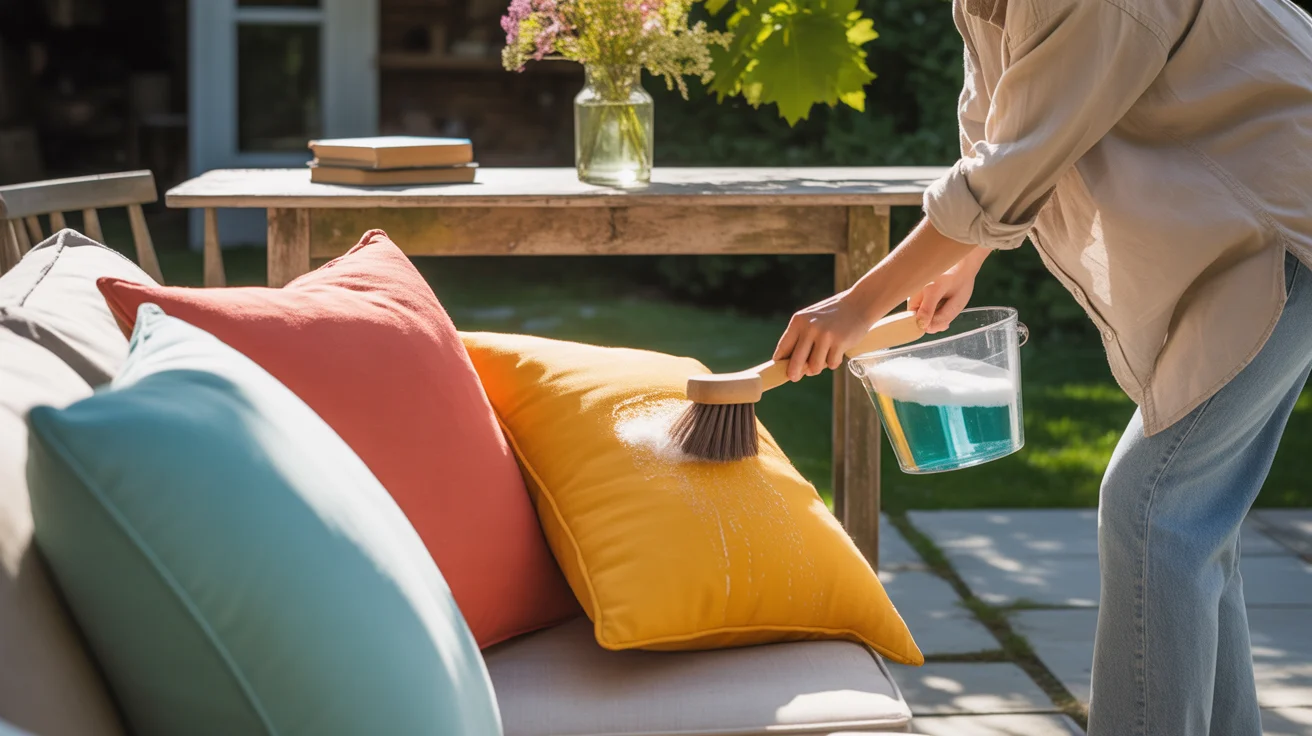
Step 4: Apply and Scrub Spray on an upholstery cleaner or a cleaning solution of mild detergent and lukewarm water. Dip a soft-bristled brush into the cleaning solution and scrub thoroughly.
Step 5: Thorough Rinsing Rinse thoroughly with clean water. Squeeze out any excess water and blot with a clean towel to soak up additional moisture.
Method 2: Pressure Washing Technique
For heavily soiled cushions, pressure washing provides excellent results when done correctly.
Setup Process: Begin by laying the cushions out on a deck, driveway or sidewalk. Connect your pressure washer to water supply and add cleaning solution to the reservoir.
Washing Steps: Attach the cleaning/soap spray tip and fully spray each of the outdoor cushions with the cleaning solution. Make sure not to spray too close to the cushion fabric — a pressure washer can damage fabric surfaces if it gets too close.
For stubborn stains, use a hard-bristle brush to more fully integrate the cleaning solution into the fibers of the cushion. Allow solution to sit for 3-5 minutes before rinsing.
Important Safety Note: Many manufacturers recommend AGAINST power washing cushions as it can damage the fabric or break the seams. Use lowest pressure settings and maintain safe distance.
Method 3: OxiClean Deep Cleaning
To make the cleaning solution, start with about a 1/4 cup of powdered OxiClean in a bucket. Add approximately 1 gallon of hot or very warm tap water and mix well to dissolve.
This method excels at whitening and deep cleaning, particularly effective for white or light-colored cushions that have yellowed over time.
Targeted Stain Removal
Mildew and Mold Stains: On stains that are visibly dark, pretreat with a 50/50 solution of warm water and white vinegar in a spray bottle. Mix equal parts water and white vinegar (1:1 ratio). Apply to the stain with a sponge, scrub gently with a soft brush, and rinse thoroughly.
Grease and Oil Stains: Sprinkle baking soda on the stain, let it sit for a few hours, and then brush away. For stubborn stains, use a mixture of dish soap and warm water.
Bird Droppings: Remove as much of the droppings as possible with a microfiber cloth. Prepare a cleaning solution of 1 tsp. mild dish soap {such as Dawn}, 1 tsp Borax, and 1 quart of warm water.
Wine Stains: Blot the stain with a clean cloth to absorb as much wine as possible. Follow with appropriate cleaning solution treatment.
Special Cleaning Solutions
White Vinegar Method: Pour straight undiluted 30% vinegar into a spray bottle. In a well-ventilated area, spritz it all over your outdoor cushion covers and patio furniture. Let the vinegar sit on the mildew / mold stains for about 15 minutes.
Bleach Solution (For Bleach-Safe Fabrics): Add 1⁄2 cup bleach to the washing machine drum. Fill with lukewarm water to a low water level. Add cushion covers and wash on a gentle/delicate cycle with cool water.
Proper Drying Techniques
Air Drying Best Practices: Stand up the cushions so they lean on each other and can stay mostly vertical. This helps the water drain and allows the sun to warm both sides of the cushion.
If the sun is out, put it to good use. The cushions get a natural dry and the sun kills bacteria, too. Check on the cushions periodically, though. You don’t want prolonged exposure to the sun to fade the fabric.
Drying Timeline: I find that if I can wash these in the morning on a sunny day, they are 80-90% dry by the evening. Allow complete drying before storage to prevent mold growth.
Removable Cover Care
For cushions with zippered covers:
Check care labels: Confirm the covers are machine-washable and note any specific instructions (e.g., water temperature or detergent type).
Machine wash: Place covers in the washing machine on a gentle cycle with cold water and a mild detergent.
Remove the cover from the seat pad and wash the cover only. The cover fabric can shrink a little as it dries, so we advise that you put the cover back on the padded filling material before the cover is completely dry.
Prevention and Maintenance
Regular Care Schedule: A good rule of thumb is to give your outdoor cushions a good, deep clean twice a year and vacuum once a week to remove dirt and debris.
Most suggest at least 2 to 4 times per year. At bare minimum, you should towel off, hang dry, or put cushions / pillows out in the sun to dry any time they get wet.
Immediate Response Protocol: Treat stains or spills as soon as possible. The sooner you treat a spill, the less likely a stain will set in.
Mold Prevention Strategies: Allow cushions and furniture to completely dry after rains or cleaning. Never put away damp items. Keep umbrellas open when not in use to encourage airflow.
Fabric Protection Applications
Post-Cleaning Protection: After the cushions are completely dry, treat them with a fabric protectant to help prevent future stains.
Consider applying a fabric protector or waterproofing spray after cleaning to enhance the cushions’ resistance to stains and moisture.
Seasonal Storage Guidelines
Winter Preparation: After cleaning and drying the cushions, place in zippered plastic bags or large black garbage bags. Store in a dry location, away from moisture or humidity.
Storage Location Requirements: Sheds, garages, and attics are perfect places to store these items when not in use.
Pre-Storage Inspection: When it’s time to pack up your cushions for the colder months, be sure to check them for any stains or food spills. These will be harder to remove if they’re left all winter.
When to Replace Cushions
Sometimes cleaning isn’t enough. Consider replacement when:
- Mold penetration reaches foam core
- Fabric shows permanent discoloration
- Structural integrity compromises
- Professional cleaning attempts fail
If the mold and mildew stains are extreme and persist even after a thorough cleaning, it’s time to get some new outdoor cushions.
Safety Considerations
Personal Protection: When cleaning with bleach or strong chemicals, always wear protective equipment including gloves, eye protection, and ensure adequate ventilation.
Fabric Testing: When cleaning patio furniture, before using a cleaning solution do a spot-test on an inconspicuous part of the fabric (such as the underside of a cushion) to make sure it won’t affect the fabric or colors.
Professional vs. DIY Cleaning
While most outdoor cushion cleaning can be accomplished at home, consider professional services for:
- Expensive designer cushions
- Severely mold-damaged items
- Delicate vintage fabrics
- Time constraints during busy seasons
Cost-Effective Cleaning Solutions
Budget-Friendly Options:
- Dish soap and vinegar combination
- Baking soda for odor absorption
- White vinegar for mold prevention
- Hydrogen peroxide for tough stains
Investment-Worthy Tools:
- Quality soft-bristled brushes
- Garden hose with adjustable nozzle
- Fabric protection sprays
- Proper storage containers
Seasonal Cleaning Calendar
Spring Deep Clean: Remove from storage, inspect for damage, deep clean before first use
Summer Maintenance: Weekly vacuuming, immediate stain treatment, monthly inspection
Fall Preparation: Thorough cleaning before storage, mold prevention treatment
Winter Storage: Proper storage in dry, ventilated areas with moisture protection
Troubleshooting Common Problems
Persistent Odors: Multiple vinegar treatments, sun exposure, activated charcoal absorption
Color Fading: UV protection sprays, strategic placement, fabric-appropriate cleaners
Texture Changes: Gentle brushing, proper drying techniques, fabric conditioning
Seam Separation: Professional repair evaluation, replacement consideration
Environmental Considerations
Choose eco-friendly cleaning products when possible:
- White vinegar over harsh chemicals
- Biodegradable soaps
- Natural drying over heat sources
- Proper disposal of cleaning materials
Conclusion
Regular maintenance and proper cleaning techniques significantly extend outdoor cushion lifespan while maintaining their aesthetic appeal. By following these detailed methods and preventive measures, you’ll ensure your outdoor living space remains comfortable and inviting throughout every season.
Remember that consistency in care proves more effective than intensive cleaning sessions. Implement these practices as part of your regular outdoor maintenance routine for optimal results.